<?xml version='1.0' encoding='UTF-8'?>

<!DOCTYPE article PUBLIC "-//NLM//DTD JATS (Z39.96) Journal Publishing DTD v1.1d1 20130915//EN" "JATS-journalpublishing1.dtd">
<article xmlns:xlink="http://www.w3.org/1999/xlink">
  <front>
    <journal-meta id="journal-meta-87cddb9ab7774ac9973b6a64b7cbc767">
      <journal-id journal-id-type="nlm-ta">Sciresol</journal-id>
      <journal-id journal-id-type="publisher-id">Sciresol</journal-id>
      <journal-id journal-id-type="journal_submission_guidelines">https://jmsh.ac.in/</journal-id>
      <journal-title-group>
        <journal-title>Journal of Medical Sciences and Health</journal-title>
      </journal-title-group>
      <issn publication-format="print"/>
    </journal-meta>
    <article-meta>
        
          
            <article-id pub-id-type="doi">10.46347/jmsh.v12.i3.26.52</article-id>
          
          
            <article-categories>
              <subj-group>
                <subject>ORIGINAL ARTICLE</subject>
              </subj-group>
            </article-categories>
            <title-group>
              <article-title>&lt;p&gt;Family Support in Non-Communicable Disease Management and its Impact on the Quality of Life among the Elderly in Urban Service Area of a Tertiary Care Facility: A Descriptive Cross-Sectional Study&lt;/p&gt;</article-title>
            </title-group>
          
          
            <pub-date date-type="pub">
              <day>30</day>
              <month>3</month>
              <year>2026</year>
            </pub-date>
            <permissions>
              <copyright-year>2026</copyright-year>
            </permissions>
          
          
            <volume>12</volume>
          
          
            <issue>3</issue>
          
          <fpage>1</fpage>

          <abstract>
            <title>Abstract</title>
            &lt;p&gt;Non-communicable diseases (NCDs) are a growing burden among India’s elderly, particularly in Tamil Nadu. Family support plays a critical role in disease management and quality of life (QOL), though regional data remain limited. A cross-sectional study was conducted among 266 elderly patients attending an Urban Health Training Center NCD clinic, selected by simple random sampling. QOL was assessed using WHOQOL-BREF (Physical, Psychological, Social, Environmental domains), and family support was measured using the Multidimensional Scale of Perceived Social Support (family subscale). Data were analyzed using SPSS. Participants were predominantly 60–70 years (80.1%) and female (59.4%). Single NCD was reported by 56.4%, while 43.6% had multimorbidity. Family support was high in 57%, moderate in 26%, and low in 15%. Practical support for medication, diet, and physical activity was limited. Family support correlated significantly with all QOL domains (P&amp;lt;0.001). Higher support was associated with better scores in environment (53.8%), psychological (48%), social relationships (34.4%), and physical health (32.4%). Family support is strongly associated with improved QOL across all domains among elderly with NCDs in urban Tamil Nadu. Incorporating family-centered interventions into NCD programs could enhance outcomes and well-being in this population.&lt;/p&gt;
          </abstract>
          
          
            <kwd-group>
              <title>Keywords</title>
              
                <kwd>Family support</kwd>
              
                <kwd>Non-communicable diseases</kwd>
              
                <kwd>Quality of life</kwd>
              
            </kwd-group>


        <contrib-group>
          
            
              <contrib contrib-type="author">
                <name>
                  <surname>Balakrishnan</surname>
                  <given-names>Nithesh</given-names>
                </name>
                
                  <xref rid="aff-1" ref-type="aff">1</xref>
                
              </contrib>


              <aff id="aff-1">
                <institution> Assistant Professor, Department of Community Medicine Melmaruvathur Adhiparasakthi Institute of Medical Sciences </institution>
                <addr-line>Melmaruvathur, Tamil Nadu India</addr-line>
              </aff>
            
              <aff id="aff-2">
                <institution> Associate Professor, Department of Community Medicine Melmaruvathur Adhiparasakthi Institute of Medical Sciences </institution>
                <addr-line>Melmaruvathur, Tamil Nadu India</addr-line>
              </aff>
            
              <aff id="aff-3">
                <institution> Professor and Head, Department of Community Medicine Melmaruvathur Adhiparasakthi Institute of Medical Sciences </institution>
                <addr-line>Melmaruvathur, Tamil Nadu India</addr-line>
              </aff>


              <contrib contrib-type="author">
                <name>
                  <surname>Vaithiyalingam</surname>
                  <given-names>Saravanan</given-names>
                </name>
                
                  <xref rid="aff-2" ref-type="aff">2</xref>
                
              </contrib>


              <aff id="aff-1">
                <institution> Assistant Professor, Department of Community Medicine Melmaruvathur Adhiparasakthi Institute of Medical Sciences </institution>
                <addr-line>Melmaruvathur, Tamil Nadu India</addr-line>
              </aff>
            
              <aff id="aff-2">
                <institution> Associate Professor, Department of Community Medicine Melmaruvathur Adhiparasakthi Institute of Medical Sciences </institution>
                <addr-line>Melmaruvathur, Tamil Nadu India</addr-line>
              </aff>
            
              <aff id="aff-3">
                <institution> Professor and Head, Department of Community Medicine Melmaruvathur Adhiparasakthi Institute of Medical Sciences </institution>
                <addr-line>Melmaruvathur, Tamil Nadu India</addr-line>
              </aff>


              <contrib contrib-type="author">
                <name>
                  <surname>Vengadesan</surname>
                  <given-names>Murugan</given-names>
                </name>
                
                  <xref rid="aff-3" ref-type="aff">3</xref>
                
              </contrib>


              <aff id="aff-1">
                <institution> Assistant Professor, Department of Community Medicine Melmaruvathur Adhiparasakthi Institute of Medical Sciences </institution>
                <addr-line>Melmaruvathur, Tamil Nadu India</addr-line>
              </aff>
            
              <aff id="aff-2">
                <institution> Associate Professor, Department of Community Medicine Melmaruvathur Adhiparasakthi Institute of Medical Sciences </institution>
                <addr-line>Melmaruvathur, Tamil Nadu India</addr-line>
              </aff>
            
              <aff id="aff-3">
                <institution> Professor and Head, Department of Community Medicine Melmaruvathur Adhiparasakthi Institute of Medical Sciences </institution>
                <addr-line>Melmaruvathur, Tamil Nadu India</addr-line>
              </aff>
            
          
        </contrib-group>
        
    </article-meta>
  </front>
  <body>
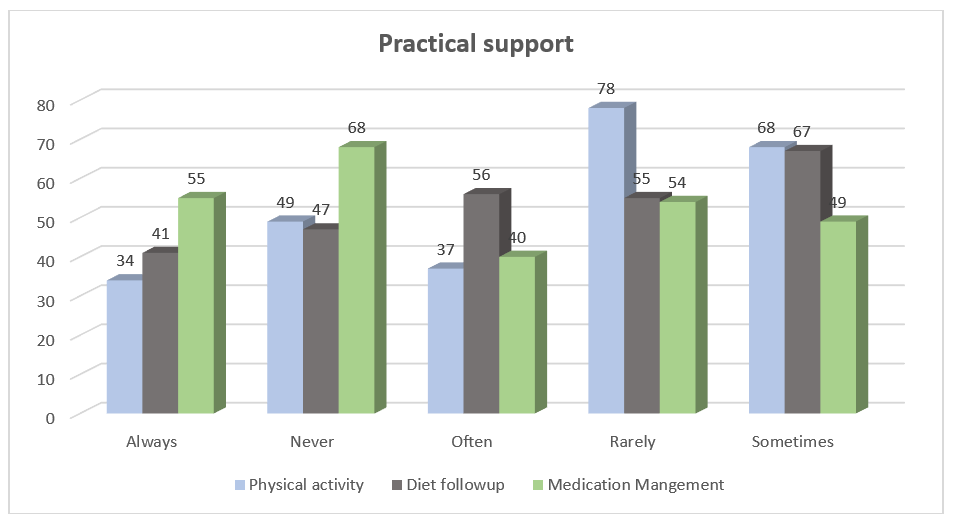
    <heading><span><bold>Introduction</bold></span></heading><p><span>Non-communicable diseases (NCDs) such as diabetes, hypertension, cardiovascular diseases, and chronic respiratory disorders are major contributors to morbidity and mortality worldwide, accounting for 74% of deaths<superscript>[<xref ref-type="link" rid="#ref-1">1</xref>]</superscript>. In India, NCDs are responsible for over 65% of deaths, reflecting an epidemiological transition driven by urbanization, lifestyle changes, and population ageing<superscript>[<xref ref-type="link" rid="#ref-2">2</xref>]</superscript>. Risk factors increase with age, with the highest prevalence seen in individuals aged 60 years and above<superscript>[<xref ref-type="link" rid="#ref-3">3</xref>]</superscript>.</span></p><div><span> </span></div><p><span>In Tamil Nadu, NCDs contribute to nearly 75% of all deaths. The Tamil Nadu STEPS Survey (2020) reported a hypertension prevalence of 33.9% and diabetes prevalence of 17.6% among adults<superscript>[<xref ref-type="link" rid="#ref-4">4</xref>]</superscript>. India, home to the world’s second-largest elderly population, is projected to see its proportion of older persons rise from 8% in 2015 to 19% by 2050<superscript>[<xref ref-type="link" rid="#ref-5">5</xref>]</superscript>. Ageing often brings poverty, widowhood, social isolation, reduced family support, and dependency<superscript>[<xref ref-type="link" rid="#ref-6">6</xref>]</superscript>.</span></p><p><span>The family serves as the primary unit of care, providing emotional, social, and financial support, which significantly influences disease management and treatment adherence<superscript>[<xref ref-type="link" rid="#ref-7">7</xref>, <xref ref-type="link" rid="#ref-8">8</xref>]</superscript>. Strong family support is associated with better quality of life (QOL), while its absence worsens outcomes, particularly in multimorbidity<superscript>[<xref ref-type="link" rid="#ref-9">9</xref>-<xref ref-type="link" rid="#ref-11">11</xref>]</superscript>. Observational studies confirm that enhanced family support correlates with improved management and well-being<superscript>[<xref ref-type="link" rid="#ref-12">12</xref>]</superscript>. Given the limited</span></p><div><span> </span></div><p><span>evidence from Tamil Nadu, this study assesses family support and its relationship with QOL among elderly NCD patients in an urban tertiary care setting.</span></p><heading><span><bold>Materials and methods</bold></span></heading><p><span><bold>Study Design</bold></span></p><list><list-item><p><span>This was a descriptive cross-sectional study. </span></p></list-item></list><p><span><bold>Study Setting</bold></span></p><list><list-item><p><span>The study was carried out in the Urban Health Training Centre (UHTC), the urban field practice area of a tertiary care hospital. </span></p></list-item><list-item><p><span>The study period extended from October 2024 to February 2025. </span></p></list-item></list><p><span><bold>Study Participants</bold></span></p><list><list-item><p><span>Elderly patients registered under the Non-Communicable Disease (NCD) clinic at the UHTC were included in the study. </span></p></list-item></list><p><span><bold>Sample Size</bold></span></p><list><list-item><p><span>The sample size was calculated to estimate the proportion of elderly individuals receiving strong family support in the management of NCDs. </span></p></list-item><list-item><p><span>Based on a previous study reporting a prevalence of 22.2% of strong family support, with a 95% confidence level and an absolute precision of 5%, the required sample size was calculated as 266 using the standard single population proportion formula<superscript>[<xref ref-type="link" rid="#ref-13">13</xref>]</superscript>. </span></p></list-item></list><p><span><bold>Sampling Technique</bold></span></p><list><list-item><p><span>A list of eligible elderly patients was obtained from the NCD clinic register. </span></p></list-item><list-item><p><span>Participants were selected using a simple random sampling technique. </span></p></list-item><list-item><p><span>A total of 266 participants were included in the study.</span></p></list-item></list><p><span><bold>Data collection procedure</bold></span></p><p><span>Data collection was carried out after obtaining the clearance from the Institutional Ethics Committee (IEC No:486(08)2024). Prior to starting data collection, a one-day training session was conducted for postgraduate students, CRMI, and MSW personnel posted at the Urban Health Training Centre. The training focused on data collection procedures using the questionnaire and its translation into the local language. A structured, validated study tool was employed to collect data on socio-demographic characteristics (age, gender, education, socioeconomic status, and employment status), health status (type and duration of NCDs), family support (assessed using the Multidimensional Scale of Perceived Social Support)<superscript>[<xref ref-type="link" rid="#ref-14">14</xref>]</superscript> and Quality of life (assessed using the WHOQOL-BREF)<superscript>[<xref ref-type="link" rid="#ref-15">15</xref>]</superscript>.</span></p><p><span>The Multidimensional Scale of Perceived Social Support (MSPSS), a 12-item questionnaire, was used to assess perceived social support from three sources: family, friends, and a significant other. For this study, only the family subscale - comprising items 3, 4, 8, and 11 was considered (Family Subscale: Sum across items then divide by 4). Based on standard scoring guidelines, perceived social support was categorized as low (1–2.9), moderate (3–5), or high (5.1–7)<superscript>[<xref ref-type="link" rid="#ref-14">14</xref>]</superscript>.</span></p><p><span>Quality of life (QOL) was assessed using the WHOQOL-BREF, and raw scores were calculated for four domains: Physical Health (7 items), Psychological (6 items), Social Relationships (3 items), and Environment (8 items). Responses to the 26-item questionnaire, rated on a 5-point Likert scale, were summed per domain after reversing negatively phrased items (Q3, Q4, Q26). All items in each domain had mean scores multiplied by 4 to give a “domain raw score” (4–20) to maintain consistency with WHOQOL-100. To generate a 0-100 scale, these domain raw scores were linearly transformed according to the following formula: Domain score = (raw score − 4) × (100/16), higher domain scores indicate better quality of life and lower domain scores indicate poorer QOL.</span></p><p><span>Based on prior literature, individual domain QOL profiles were classified as low (≤45), moderate (45–65), or high (&gt;65). Additionally, two standalone items (Q1 and Q2) were asked about general quality of life and health satisfaction, and rated separately on a 1-5 scale<superscript>[<xref ref-type="link" rid="#ref-15">15</xref>]</superscript>.</span></p><p><span><bold>Data analysis</bold></span></p><p><span>The collected data were entered into Microsoft Excel and subsequently analyzed using IBM SPSS Statistics version 29.0. The categorical variables expressed in frequency and percentage. Chi square was applied to find the association between family support and QOL.</span></p><heading><span><bold>Results</bold></span></heading><p><span>The baseline characteristics of the study participants are presented in <xref ref-type="link" rid="#table-1">[Table. 1]</xref>. The level of family support among the study participants (shown in <xref ref-type="link" rid="#table-2">[Table. 2]</xref>), 154 (57.9%) reported receiving high family support, while 71 (26.7%) experienced moderate support; in contrast, 41 participants (15.4%) reported low family support. <xref ref-type="link" rid="#table-3">[Table. 3]</xref> shows the role of family members in providing financial support. For catastrophic expenditures, 13.2% of participants always received financial support from their family, 13.5% often received support, 14.3% sometimes received support, and 23.3% rarely received support, whereas 35.7% never received financial assistance. Regarding health insurance, 19.5% always received family support, 19.9% often received support, 15.4% sometimes received support, and 18.8% rarely received support. However, 26.3% of participants reported never receiving financial support from their family for health insurance.</span></p><figure id="table-1"><table><thead><tr><th><span><bold>Socio-demographic details</bold></span></th><th><span><bold>Frequency (n = 266)</bold></span></th><th><span><bold>Percentage (%)</bold></span></th></tr></thead><tbody><tr><td colspan="3"><span><bold>Age group (years)</bold></span></td></tr><tr><td><span>60-70</span></td><td><span>213</span></td><td><span>80.1</span></td></tr><tr><td><span>71-80</span></td><td><span>47</span></td><td><span>17.7</span></td></tr><tr><td><span>&gt;80</span></td><td><span>6</span></td><td><span>2.3</span></td></tr><tr><td colspan="3"><span><bold>Gender</bold></span></td></tr><tr><td><span>Male</span></td><td><span>108</span></td><td><span>40.6</span></td></tr><tr><td><span>Female</span></td><td><span>158</span></td><td><span>59.4</span></td></tr><tr><td colspan="3"><span><bold>Education status</bold></span></td></tr><tr><td><span>No formal education</span></td><td><span>97</span></td><td><span>36.5</span></td></tr><tr><td><span>Primary</span></td><td><span>89</span></td><td><span>33.5</span></td></tr><tr><td><span>Secondary</span></td><td><span>51</span></td><td><span>19.2</span></td></tr><tr><td><span>Higher secondary</span></td><td><span>14</span></td><td><span>5.3</span></td></tr><tr><td><span>Graduate, PG and above</span></td><td><span>15</span></td><td><span>5.5</span></td></tr><tr><td colspan="3"><span><bold>Occupation</bold></span></td></tr><tr><td><span>Unemployed</span></td><td><span>132</span></td><td><span>49.6</span></td></tr><tr><td><span>Self employed</span></td><td><span>73</span></td><td><span>27.4</span></td></tr><tr><td><span>Government employee</span></td><td><span>14</span></td><td><span>5.3</span></td></tr><tr><td><span>Private sector employee</span></td><td><span>11</span></td><td><span>4.1</span></td></tr><tr><td><span>Farmer</span></td><td><span>36</span></td><td><span>13.6</span></td></tr><tr><td colspan="3"><span><bold>Socio-economic status </bold></span><italic><span>(#according updated modified BG Prasad’s class)</span></italic></td></tr><tr><td><span>I (Upper ≥9131)</span></td><td><span>26</span></td><td><span>9.8</span></td></tr><tr><td><span>II (Upper middle 4566-9130)</span></td><td><span>66</span></td><td><span>24.8</span></td></tr><tr><td><span>III (Middle 2739-4565)</span></td><td><span>38</span></td><td><span>14.3</span></td></tr><tr><td><span>IV (Lower middle 1370-2738)</span></td><td><span>70</span></td><td><span>26.3</span></td></tr><tr><td><span>V (Lower &lt;1370)</span></td><td><span>66</span></td><td><span>24.8</span></td></tr><tr><td colspan="3"><span><bold>Chronic conditions </bold></span><italic><span>(Diabetes, Hypertension and Cardiovascular diseases)</span></italic></td></tr><tr><td><span>One conditions</span></td><td><span>150</span></td><td><span>56.4</span></td></tr><tr><td><span>More than one conditions</span></td><td><span>116</span></td><td><span>43.6</span></td></tr></tbody></table><figcaption><span><bold>Table 1: Distribution of study participants based on socio-demographic details (n=266)</bold></span></figcaption></figure><p> </p><figure id="table-2"><table><thead><tr><th><span><bold>Level of family support</bold></span></th><th><span><bold>Frequency (n = 266)</bold></span></th><th><span><bold>Percentage (%)</bold></span></th></tr></thead><tbody><tr><td><span>High support</span></td><td><span>154</span></td><td><span>57.9</span></td></tr><tr><td><span>Moderate support</span></td><td><span>71</span></td><td><span>26.7</span></td></tr><tr><td><span>Low support</span></td><td><span>41</span></td><td><span>15.4</span></td></tr></tbody></table><figcaption><span><bold>Table 2: Distribution of level of family support by Multidimensional Scale of Perceived Social Support</bold></span></figcaption></figure><p> </p><p><span>The role of family members in providing emotional support to the participants (shown in <xref ref-type="link" rid="#table-4">[Table. 4]</xref>). Overall, 19.2% of participants reported always receiving emotional support from their family, 28.2% often received support, and 19.9% sometimes received support. In contrast, 21.1% rarely felt supported, while 11.7% reported never receiving emotional support from their family.</span></p><figure id="table-3"><table><thead><tr><th><span><bold>Role of family members in financial support</bold></span></th><th><p><span><bold>Catastrophic expenditure </bold></span></p><p><span><bold>(n = 266) (%)</bold></span></p></th><th><p><span><bold>Health insurance </bold></span></p><p><span><bold>(n = 266) (%)</bold></span></p></th></tr></thead><tbody><tr><td><span>Always</span></td><td><span>35 (13.2%)</span></td><td><span>52 (19.5%)</span></td></tr><tr><td><span>Often</span></td><td><span>36 (13.5%)</span></td><td><span>53 (19.9%)</span></td></tr><tr><td><span>Sometimes</span></td><td><span>38 (14.3%)</span></td><td><span>41 (15.4%)</span></td></tr><tr><td><span>Rarely</span></td><td><span>62 (23.3%)</span></td><td><span>50 (18.8%)</span></td></tr><tr><td><span>Never</span></td><td><span>95 (35.7%)</span></td><td><span>70 (26.3%)</span></td></tr></tbody></table><figcaption><span><bold>Table 3: Distribution of study participants based on the role of family members in financial support (n=266)</bold></span></figcaption></figure><p> </p><figure id="table-4"><table><thead><tr><th><span><bold>Role of family members on emotional support</bold></span></th><th><p><span><bold>Frequency </bold></span></p><p><span><bold>(n = 266)</bold></span></p></th><th><span><bold>Percentage (%)</bold></span></th></tr></thead><tbody><tr><td><span>Always</span></td><td><span>51</span></td><td><span>19.2</span></td></tr><tr><td><span>Often</span></td><td><span>75</span></td><td><span>28.2</span></td></tr><tr><td><span>Sometimes</span></td><td><span>53</span></td><td><span>19.9</span></td></tr><tr><td><span>Rarely</span></td><td><span>56</span></td><td><span>21.1</span></td></tr><tr><td><span>Never</span></td><td><span>31</span></td><td><span>11.7</span></td></tr></tbody></table><figcaption><span><bold>Table 4: Distribution of study participants based on the role of family members on emotional support (n=266)</bold></span></figcaption></figure><p> </p><figure id="figure-1"><graphic src="https://schoproductionportal.s3.ap-south-1.amazonaws.com/data/JMSH/393/1784621008934.png"/><figcaption><span><bold>Fig. 1: Distribution of study participants based on the family role in Practical support (n=266)</bold></span></figcaption></figure><p> </p><p><span><xref ref-type="link" rid="#figure-1">[Fig. 1]</xref> illustrates the role of family members in providing practical support, including assistance with physical activity, dietary adherence, and medication management. Regarding physical activity, 34 participants reported always receiving family support, while the majority (78 participants) indicated that such support was rarely provided; 68 participants reported receiving support sometimes. For dietary adherence, 41 participants reported always receiving family support, 56 often received support, and 67 sometimes received assistance with diet follow-up. Concerning medication management, only 20.6% of participants reported receiving consistent support from family members, whereas the remaining participants experienced limited or no family support in managing their medications.</span></p><figure id="table-2"><table><thead><tr><th rowspan="2"><span><bold>Level of family support</bold></span></th><th colspan="3"><p><span><bold>Physical QOL (n, %)</bold></span></p></th><th rowspan="2"><span><bold>Total </bold></span><line-break/><span><bold>(n, %)</bold></span></th><th rowspan="2"><span><bold>P-value</bold></span></th></tr><tr><th><span><bold>High quality </bold></span><line-break/><span><bold>(Score &gt;65)</bold></span></th><th><span><bold>Mod quality </bold></span><line-break/><span><bold>(Score 46-65)</bold></span></th><th><span><bold>Poor quality </bold></span><line-break/><span><bold>(Score &lt;45)</bold></span></th></tr></thead><tbody><tr><td><span>High support</span></td><td><span>50 (32.5)</span></td><td><span>79 (51.3%)</span></td><td><span>25 (16.2%)</span></td><td><span>154 (100%)</span></td><td rowspan="3"><p><span> </span></p><p><span><bold>0.000</bold></span></p><p><span> </span></p></td></tr><tr><td><span>Mod support</span></td><td><span>12 (16.9%)</span></td><td><span>40 (56.3%)</span></td><td><span>19 (26.8%)</span></td><td><span>71 (100%)</span></td></tr><tr><td><span>Low support</span></td><td><span>6 (14.6%)</span></td><td><span>8 (19.5%)</span></td><td><span>27 (65.9%)</span></td><td><span>41 (100%)</span></td></tr><tr><td colspan="6"><span><bold>Psychological QOL (n, %)</bold></span></td></tr><tr><td><span>High support</span></td><td><span>74 (48.1%)</span></td><td><span>49 (31.8%)</span></td><td><span>31 (20.1%)</span></td><td><span>154 (100%)</span></td><td rowspan="3"><p><span> </span></p><p><span><bold>0.000</bold></span></p><p><span> </span></p></td></tr><tr><td><span>Mod support</span></td><td><span>19 (26.8%)</span></td><td><span>29 (40.8%)</span></td><td><span>23 (32.4%)</span></td><td><span>71 (100%)</span></td></tr><tr><td><span>Low support</span></td><td><span>5 (12.2%)</span></td><td><span>10 (24.4%)</span></td><td><span>26 (63.4%)</span></td><td><span>41 (100%)</span></td></tr><tr><td colspan="6"><span><bold>Social relationship QOL (n, %)</bold></span></td></tr><tr><td><span>High support</span></td><td><span>53 (34.4%)</span></td><td><span>51 (33.1%)</span></td><td><span>50 (32.5%)</span></td><td><span>154 (100%)</span></td><td rowspan="3"><p><span> </span></p><p><span><bold>0.000</bold></span></p><p><span> </span></p></td></tr><tr><td><span>Mod support</span></td><td><span>7 (9.9%)</span></td><td><span>20 (28.2%)</span></td><td><span>44 (62.0%)</span></td><td><span>71 (100%)</span></td></tr><tr><td><span>Low support</span></td><td><span>4 (9.8%)</span></td><td><span>6 (14.6%)</span></td><td><span>31 (75.6%)</span></td><td><span>41 (100%)</span></td></tr><tr><td colspan="6"><span><bold>Environment QOL (n, %)</bold></span></td></tr><tr><td><span>High support</span></td><td><span>83 (53.9%)</span></td><td><span>51 (33.1%)</span></td><td><span>20 (13.0%)</span></td><td><span>154 (100%)</span></td><td rowspan="3"><p><span> </span></p><p><span><bold>0.000</bold></span></p><p><span> </span></p></td></tr><tr><td><span>Mod support</span></td><td><span>17 (23.9%)</span></td><td><span>34 (47.9%)</span></td><td><span>20 (28.2%)</span></td><td><span>71 (100%)</span></td></tr><tr><td><span>Low support</span></td><td><span>3 (7.3%)</span></td><td><span>14 (34.1%)</span></td><td><span>24 (58.5%)</span></td><td><span>41 (100%)</span></td></tr></tbody></table><figcaption><span><bold>Table 5: Association between level of family support and across various domains of QOL – Physical, Psychological, Social relationship and Environment (n=266)</bold></span></figcaption></figure><p> </p><p><span><xref ref-type="link" rid="#table-5">[Table. 5]</xref> shows a statistically significant association found between family support and various domains of quality of life - Physical, Psychological, Social Relationship, and Environmental and shows (P-value = 0.000). Participants with high level of family support reported better QOL across all the four domains, 50 (32.4%) had high physical QOL, 74 (48%) high psychological QOL, 53(34.4%) high social relationship QOL, and 83 (53.8%) had high environmental QOL. In contrast, those with low family support had poorer QOL. These findings indicate that better family associated with improved well-being.  </span></p><heading><span><bold>Discussion</bold></span></heading><p><span>The present study aimed to assess the impact of family support in the management of NCD among the elderly and its association with their QOL. </span></p><p><span>A total of 266 elderly participants were included in the study. The majority (80.1%) were aged 60-70 years and 59.4% were female. Nearly 36.5% had no formal education and 49.6% were unemployed. Most of the participants (56.4%) had one NCD, while 43.6% had multiple chronic conditions.</span></p><p><span>Our findings highlight that a significant proportion of participants 57.9%, 26.7% &amp; 15.4% received high, moderate and low family support respectively. The study done by Samanta T have been observed that family members encourage the elderly people to engage in household chores, family can support them perform exercise which helps them remain fit, a protective factor of chronic diseases. Thus, family support and care play a major role in older people leading a healthy life in India<superscript>[<xref ref-type="link" rid="#ref-17">17</xref>]</superscript>.<superscript> </superscript> </span></p><p><span>The study conducted in North Delhi reported that the lives of the elderly often depend on the support they receive from their family, which is typically serve as their primary source of social and emotional support. Family support was found to be strongly associated with a better quality of life among the elderly<superscript>[<xref ref-type="link" rid="#ref-18">18</xref>]</superscript>. Similarly, a study by Dongre and Deshmukh<superscript>[<xref ref-type="link" rid="#ref-19">19</xref>]</superscript> showed that elderly people who had good family support, were involved in decision-making, and were not neglected by their families had higher average scores in psychological, social, and environmental well-being. In the present study, 19.2% of participants reported always receiving emotional support from their families. However, 21.1% and 11.7% reported rarely and never receiving emotional support, respectively, the lack of emotional support may contribute to poorer health outcomes and challenges in managing chronic conditions. A study conducted in Chennai in 2023 found that 84.2% of elderly people living in old age homes were affected by depression, suggesting that strong family support may help protect against the mental health issues often associated with non-communicable diseases<superscript>[<xref ref-type="link" rid="#ref-20">20</xref>]</superscript>.</span></p><p><span>In this study found family members support the participants always in related to practical support like physical activity, diet and medication were 12.7%, 15.4% &amp; 20.6% respectively. The remaining participants gets practical support from family may be sometimes or rarely or never. Many studies have shown that a significant number of older adults don’t get enough of practical support from their families to stay active, eat healthy, or take their medications regularly<superscript>[<xref ref-type="link" rid="#ref-21">21</xref>]</superscript>.</span></p><p><span>This study revealed a statistically significant association between family support and all four domains of QOL - physical, psychological, social, and environmental (P &lt; 0.001). Participants who received strong support from their families consistently reported better quality of life. For instance, 32.4% had good physical well-being, 48% had better psychological health, 34.4% had stronger social relationships, and 53.8% experienced a more supportive environment. On the other hand, those with low family support tended to have poorer outcomes in these areas, highlighting the crucial role of family in promoting overall well-being among the elderly.</span><italic><span> </span></italic><span>The study done by Krishnappa L in urban Bangalore found that older people tend to have better when they financially secure and have a good social support system<superscript>[<xref ref-type="link" rid="#ref-5">5</xref>]</superscript>. Another study conducted in Kottayam has shown that urban older populations have better QOL in all domains excepting the social domain<superscript>[<xref ref-type="link" rid="#ref-22">22</xref>]</superscript>. In contrast, Rajasi </span><italic><span>et al</span></italic><span>. found that elderly with poor family support, particularly those experiencing neglect or lacking visits from relatives, had significantly lower QOL, especially in the psychological and social domains<superscript>[<xref ref-type="link" rid="#ref-23">23</xref>]</superscript>.<superscript> </superscript>According to Sheilini M, family support significantly improves medication adherence in elderly patients with chronic diseases, leading to better quality of life<superscript>[<xref ref-type="link" rid="#ref-7">7</xref>]</superscript>. Many studies have pointed out different things that affect quality of life, but our study shows that family support stands out as a major factor in the well-being of older adults.</span></p><p><span><bold>Strengths and limitations:</bold></span></p><p><span>This study used standard tools (MSPSS and WHOQOL-BREF) to accurately measure family support and quality of life. It explored different types of family support—financial, emotional, and practical—giving a clear idea of how families help elderly members. The research focused on an important but less-studied topic in Tamil Nadu, offering helpful insights for improving elderly care in urban areas. The limitation of the study was that it was a cross-sectional study, which shows only an association between family support and quality of life. Also, the study was done in urban area, so the findings might not reflect what happens in rural or other settings. Another limitation is that the study didn’t follow participants over time, so it doesn’t show how family support or quality of life might improve or decline in the long term.</span></p><heading><span><bold>Conclusion</bold></span></heading><p><span>This study found that family support plays a vital role in the management of non-communicable diseases among the elderly. Over half of the participants reported receiving high levels of support from their families, which was associated with better outcomes across all domains of quality of life. These findings underline the importance of involving families in elderly care to promote better health and well-being in urban settings.</span></p>
  </body>
  <back>
    <ref-list>
      <title>References</title>
      
        
          <ref id="ref-1">
            <element-citation publication-type="journal">
              
                <person-group person-group-type="author">
                  <name>
                    World Health Organization
                  </name>
                </person-group>
              
              
                <article-title>&lt;I&gt;Global status report on noncommunicable diseases&lt;/I&gt;. Geneva: WHO; 2024</article-title>


                <year>[cited 2025 June 10]</year>


                <uri>https://www.who.int/news-room/fact-sheets/detail/noncommunicable-diseases</uri>
              
            </element-citation>
          </ref>


          <ref id="ref-2">
            <element-citation publication-type="journal">
              
              
                <article-title>&lt;I&gt;Global Burden of Disease. India&lt;/I&gt;</article-title>


                <year>[cited 2025 Jun 10]</year>


                <uri>https://www.healthdata.org/research-analysis/gbd</uri>
              
            </element-citation>
          </ref>


          <ref id="ref-3">
            <element-citation publication-type="journal">
              
                <person-group person-group-type="author">
                  <name>
                    Sharma M, Gaidhane A, Choudhari SG
                  </name>
                </person-group>
              
              
                <article-title>A Comprehensive Review on Trends and Patterns of Non-communicable Disease Risk Factors in India</article-title>
              
              
                <source>Cureus</source>
              
              
                <year>2024</year>
              
              
                <volume>16</volume>
              
              
                <issue>3</issue>
              
              
                <uri>https://doi.org/10.7759/cureus.57027</uri>
              
            </element-citation>
          </ref>


          <ref id="ref-4">
            <element-citation publication-type="journal">
              
                <person-group person-group-type="author">
                  <name>
                    Selvavinayagam TS, Viswanathan V, Ramalingam A, Kangusamy B, Joseph B, Subramaniam S, &lt;I&gt;et al&lt;/I&gt;
                  </name>
                </person-group>
              
              
                <article-title>Prevalence of Noncommunicable Disease (NCDs) risk factors in Tamil Nadu: Tamil Nadu STEPS Survey (TN STEPS), 2020</article-title>
              
              
                <source>PLOS ONE</source>
              
              
                <year>2024</year>
              
              
                <volume>19</volume>
              
              
                <issue>5</issue>
              
              
                <uri>https://doi.org/10.1371/journal.pone.0298340</uri>
              
            </element-citation>
          </ref>


          <ref id="ref-5">
            <element-citation publication-type="journal">
              
                <person-group person-group-type="author">
                  <name>
                    Krishnappa L, Gadicherla S, Chidambaram P, Murthy NS
                  </name>
                </person-group>
              
              
                <article-title>Quality of life (QOL) among older persons in an urban and rural area of Bangalore, South India</article-title>
              
              
                <source>Journal of Family Medicine and Primary Care</source>
              
              
                <year>2021</year>
              
              
                <volume>10</volume>
              
              
                <issue>1</issue>
              
              
                <uri>https://doi.org/10.4103/jfmpc.jfmpc_1241_20</uri>
              
            </element-citation>
          </ref>


          <ref id="ref-6">
            <element-citation publication-type="journal">
              
                <person-group person-group-type="author">
                  <name>
                    Areeckal AS, Arunkumar N
                  </name>
                </person-group>
              
              
                <article-title>Impact of quality of life between old age homes and family households in geriatric population</article-title>
              
              
                <source>Biomedicine</source>
              
              
                <year>2021</year>
              
              
                <volume>41</volume>
              
              
                <issue>2</issue>
              
              
                <uri>https://doi.org/10.51248/.v41i2.790</uri>
              
            </element-citation>
          </ref>


          <ref id="ref-7">
            <element-citation publication-type="journal">
              
                <person-group person-group-type="author">
                  <name>
                    Sheilini M, Hande HM, George A
                  </name>
                </person-group>
              
              
                <article-title>Family Support and Medication Nonadherence among Elderly on Antihypertensives</article-title>
              
              
                <source>Indian Journal of Public Health Research &amp;amp; Development</source>
              
              
                <year>2019</year>
              
              
                <volume>10</volume>
              
              
                <issue>4</issue>
              
              
                <uri>https://doi.org/10.5958/0976-5506.2019.00706.x</uri>
              
            </element-citation>
          </ref>


          <ref id="ref-8">
            <element-citation publication-type="journal">
              
                <person-group person-group-type="author">
                  <name>
                    Kaur H, Kaur H, Venkateashan M
                  </name>
                </person-group>
              
              
                <article-title>Factors determining family support and quality of life of elderly population</article-title>
              
              
                <source>International Journal of Medical Science and Public Health</source>
              
              
                <year>2015</year>
              
              
                <volume>4</volume>
              
              
                <issue>8</issue>
              
              
                <uri>https://doi.org/10.5455/ijmsph.2015.21012015220</uri>
              
            </element-citation>
          </ref>


          <ref id="ref-10">
            <element-citation publication-type="journal">
              
                <person-group person-group-type="author">
                  <name>
                    World Health Organization, 1996
                  </name>
                </person-group>
              
              
                <article-title>&lt;I&gt;WHOQOL-BREF: Introduction, administration, scoring and generic version of the assessment: Field trial version, December 1996 (No. WHOQOL-BREF)&lt;/I&gt;</article-title>


                <uri>https://www.who.int/mental_health/media/en/76.pdf</uri>
              
            </element-citation>
          </ref>


          <ref id="ref-11">
            <element-citation publication-type="journal">
              
                <person-group person-group-type="author">
                  <name>
                    Yogesh M, Makwana N, Trivedi N, Damor N
                  </name>
                </person-group>
              
              
                <article-title>Multimorbidity, health Literacy, and quality of life among older adults in an urban slum in India: a community-based cross-sectional study</article-title>
              
              
                <source>BMC Public Health</source>
              
              
                <year>2024</year>
              
              
                <volume>24</volume>
              
              
                <issue>1</issue>
              
              
                <uri>https://doi.org/10.1186/s12889-024-19343-7</uri>
              
            </element-citation>
          </ref>


          <ref id="ref-12">
            <element-citation publication-type="journal">
              
                <person-group person-group-type="author">
                  <name>
                    Rosland AM, Piette JD
                  </name>
                </person-group>
              
              
                <article-title>Emerging models for mobilizing family support for chronic disease management: a structured review</article-title>
              
              
                <source>Chronic Illness</source>
              
              
                <year>2010</year>
              
              
                <volume>6</volume>
              
              
                <issue>1</issue>
              
              
                <uri>https://doi.org/10.1177/1742395309352254</uri>
              
            </element-citation>
          </ref>


          <ref id="ref-13">
            <element-citation publication-type="journal">
              
                <person-group person-group-type="author">
                  <name>
                    Chacko S, Jeemon P
                  </name>
                </person-group>
              
              
                <article-title>Role of family support and self-care practices in blood pressure control in individuals with hypertension: results from a cross-sectional study in Kollam District, Kerala</article-title>
              
              
                <source>Wellcome Open Research</source>
              
              
                <year>2020</year>
              
              
                <volume>5</volume>


                <uri>https://doi.org/10.12688/wellcomeopenres.16146.1</uri>
              
            </element-citation>
          </ref>


          <ref id="ref-14">
            <element-citation publication-type="journal">
              
                <person-group person-group-type="author">
                  <name>
                    Zimet GD, Dahlem NW, Zimet SG, Farley GK
                  </name>
                </person-group>
              
              
                <article-title>The Multidimensional Scale of Perceived Social Support</article-title>
              
              
                <source>Journal of Personality Assessment</source>
              
              
                <year>1988</year>
              
              
                <volume>52</volume>
              
              
                <issue>1</issue>
              
              
                <uri>https://doi.org/10.1207/s15327752jpa5201_2</uri>
              
            </element-citation>
          </ref>


          <ref id="ref-15">
            <element-citation publication-type="journal">
              
                <person-group person-group-type="author">
                  <name>
                    Gebremedhin T, Workicho A, Angaw DA
                  </name>
                </person-group>
              
              
                <article-title>Health-related quality of life and its associated factors among adult patients with type II diabetes attending Mizan Tepi University Teaching Hospital, Southwest Ethiopia</article-title>
              
              
                <source>BMJ Open Diabetes Research &amp;amp; Care</source>
              
              
                <year>2019</year>
              
              
                <volume>7</volume>
              
              
                <issue>1</issue>
              
              
                <uri>https://doi.org/10.1136/bmjdrc-2018-000577</uri>
              
            </element-citation>
          </ref>


          <ref id="ref-16">
            <element-citation publication-type="journal">
              
                <person-group person-group-type="author">
                  <name>
                    Mohanty M, Patle RA, Narlawar UW
                  </name>
                </person-group>
              
              
                <article-title>Modified BG Prasad and Modified Kuppuswami Socio-economic Status Scales: Revision and Updates for January 2024</article-title>
              
              
                <source>Preventive Medicine: Research &amp;amp; Reviews</source>
              
              
                <year>2024</year>
              
              
                <volume>1</volume>
              
              
                <issue>3</issue>
              
              
                <uri>https://doi.org/10.4103/pmrr.pmrr_28_24</uri>
              
            </element-citation>
          </ref>


          <ref id="ref-17">
            <element-citation publication-type="journal">
              
                <person-group person-group-type="author">
                  <name>
                    Samanta T, Chen F, Vanneman R
                  </name>
                </person-group>
              
              
                <article-title>Living Arrangements and Health of Older Adults in India</article-title>
              
              
                <source>The Journals of Gerontology Series B: Psychological Sciences and Social Sciences</source>
              
              
                <year>2015</year>
              
              
                <volume>70</volume>
              
              
                <issue>6</issue>
              
              
                <uri>https://doi.org/10.1093/geronb/gbu164</uri>
              
            </element-citation>
          </ref>


          <ref id="ref-18">
            <element-citation publication-type="journal">
              
                <person-group person-group-type="author">
                  <name>
                    Mahaur G, Dwivedi A, Joshi D, Dwivedi N
                  </name>
                </person-group>
              
              
                <article-title>A Study on Quality of Life among the Elderly at Urban Health Center in North Delhi</article-title>
              
              
                <source>Journal of Mid-life Health</source>
              
              
                <year>2023</year>
              
              
                <volume>14</volume>
              
              
                <issue>4</issue>
              
              
                <uri>https://doi.org/10.4103/jmh.jmh_82_22</uri>
              
            </element-citation>
          </ref>


          <ref id="ref-19">
            <element-citation publication-type="journal">
              
                <person-group person-group-type="author">
                  <name>
                    Dongre AR, Deshmukh PR
                  </name>
                </person-group>
              
              
                <article-title>Social determinants of quality of elderly life in a rural setting of India</article-title>
              
              
                <source>Indian Journal of Palliative Care</source>
              
              
                <year>2012</year>
              
              
                <volume>18</volume>
              
              
                <issue>3</issue>
              
              
                <uri>https://doi.org/10.4103/0973-1075.105688</uri>
              
            </element-citation>
          </ref>


          <ref id="ref-20">
            <element-citation publication-type="journal">
              
                <person-group person-group-type="author">
                  <name>
                    Ramesh S, Kosalram K, Srinivas V
                  </name>
                </person-group>
              
              
                <article-title>Non-communicable diseases and their impact on depression, anxiety, and stress among the geriatric population residing in old age homes in Chennai, Tamil Nadu</article-title>
              
              
                <source>Journal of Family Medicine and Primary Care</source>
              
              
                <year>2023</year>
              
              
                <volume>12</volume>
              
              
                <issue>9</issue>
              
              
                <uri>https://doi.org/10.4103/jfmpc.jfmpc_801_23</uri>
              
            </element-citation>
          </ref>


          <ref id="ref-21">
            <element-citation publication-type="journal">
              
                <person-group person-group-type="author">
                  <name>
                    Webber M, Joubert J, Fendt-Newlin M, Madavanakadu Devassy S, Scaria L, Benny AM, &lt;I&gt;et al&lt;/I&gt;
                  </name>
                </person-group>
              
              
                <article-title>Towards the Development of an Intervention to Address Social Determinants of Non-Communicable Disease in Kerala, India: A Mixed Methods Study</article-title>
              
              
                <source>International Journal of Environmental Research and Public Health</source>
              
              
                <year>2020</year>
              
              
                <volume>17</volume>
              
              
                <issue>22</issue>
              
              
                <uri>https://doi.org/10.3390/ijerph17228636</uri>
              
            </element-citation>
          </ref>


          <ref id="ref-22">
            <element-citation publication-type="journal">
              
                <person-group person-group-type="author">
                  <name>
                    Usha V, Lalitha K
                  </name>
                </person-group>
              
              
                <article-title>Quality of life of senior citizens: A Rural-Urban comparison</article-title>
              
              
                <source>Indian Journal of Social Psychiatry</source>
              
              
                <year>2016</year>
              
              
                <volume>32</volume>
              
              
                <issue>2</issue>
              
              
                <uri>https://doi.org/10.4103/0971-9962.181104</uri>
              
            </element-citation>
          </ref>


          <ref id="ref-23">
            <element-citation publication-type="journal">
              
                <person-group person-group-type="author">
                  <name>
                    Rajasi RS, Mathew T, Nujum ZT, Anish TS, Ramachandran R, Lawrence T
                  </name>
                </person-group>
              
              
                <article-title>Quality of life and sociodemographic factors associated with poor quality of life in elderly women in Thiruvananthapuram, Kerala</article-title>
              
              
                <source>Indian Journal of Public Health</source>
              
              
                <year>2016</year>
              
              
                <volume>60</volume>
              
              
                <issue>3</issue>
              
              
                <uri>https://doi.org/10.4103/0019-557x.189016</uri>
              
            </element-citation>
          </ref>
        
      
    </ref-list>
  </back>
</article>