Journal of Medical Sciences and Health
DOI: 10.46347/jmsh.v12.i3.26.211
Year: 2026, Volume: 12, Issue: 3, Pages: 307-319
Original Article
Opeoluwa Oyedele 1,2, Saara Shigwana 1
1Department of Computing, Mathematical and Statistical Sciences, School of Science, University of Namibia, Windhoek, Namibia.
2Department of Environmental Health, Faculty of Health Sciences, Nelson Mandela University, Gqeberha, South Africa.
Address for correspondence: Opeoluwa Oyedele, Department of Computing, Mathematical and Statistical Sciences, School of Science, University of Namibia, Windhoek, Namibia.
E-mail: [email protected]
Received Date:23 May 2026, Accepted Date:12 July 2026, Published Date:19 August 2026

Despite the efforts of government and partners Namibia still faces difficulties in lowering TB-related mortality. Thus, this study examined the mortality risk factors and survival outcomes for TB patients who were enrolled on the Directly Observed Treatment Short-course (DOTS) program from 2019 to 2023. A retrospective cohort study was conducted among 2,519 DOTS-TB patients. Survival probabilities were estimated using the Kaplan-Meier curves, while risk factors were identified using the Cox proportional hazards regression model. Hazard ratios (HR) with their respective 95% confidence intervals (CI) and p-values were computed. This study showed that DOTS-TB patients had an overall mortality rate of 16%, with notable variations in survival odds according to sex, age, HIV status, site of disease, region, and past medical history. Mortality was more likely to occur among DOTS-TB patients who were males (aHR 1.42, CI: 1.04-1.93), within the age groups 35-54 (aHR 1.78, CI: 1.19-2.66) and 55+ (aHR 2.45, CI: 1.68-3.57), and HIV-positive (aHR 1.63, CI: 1.27-2.09). In addition, mortality was more likely to occur among patients with both pulmonary and extrapulmonary disease site (aHR 1.51, CI: 1.04-2.19), who had multiple prior TB treatments (aHR 1.89, CI: 1.26-2.83), and were from the Hardap Region (aHR 1.46, CI: 1.02-2.08) compared to Khomas Region. This study emphasises the pressing need for focused interventions, particularly for high-risk groups such as male DOTS-TB patients, those over the age of 55, HIV positive, who have both pulmonary and extrapulmonary TB and from Hardap Region.
Even though TB is a preventable and curable disease, it continues to remain a significant global health challenge, particularly in low- and middle-income countries where access to healthcare resources can influence treatment outcomes. According to the World Health Organization [WHO][1], TB claimed the lives of 1.3 million people worldwide in 2022, including 167,000 individuals co-infected with HIV, and 424,000 deaths occurring in the Africa region. According to the WHO, Namibia, being one of the countries within the African region, reported an estimated incidence of 347 TB cases per 100,000 population in 2020[3] and an estimated
3,000 deaths due to TB in 2022[4], despite improvements in diagnostic capabilities and treatment availability. Namibia, like many countries, has implemented the Directly Observed Treatment Short-course (DOTS) program as a cornerstone of its TB control strategies. The DOTS program is the comprehensive, five-component WHO-recommended strategy for TB control and is a recognized treatment control strategy in Namibia and globally for ensuring treatment adherence and improving patient outcomes. However, despite sustained interventions by the Namibian government, international partners, and various stakeholders implementing comprehensive TB control strategies, including improved case detection, DOTS programs, and enhanced healthcare infrastructure, TB continues to pose a formidable threat to public health in Namibia, with mortality rates reflecting both the complexity of the disease and the challenges in its management. These mortality rates not only represent a significant burden on the healthcare system but also impose substantial socioeconomic costs on affected families and communities, perpetuating cycles of poverty and compromising national development objectives.
Although scholars have generated interest by exploring the performance of TB control programs and their associated factors[5-8, 12, 30], as well as the link between co-morbidities (e.g., HIV infection, diabetes, and anaemia), smoking, number of TB treatments, behavioural factors, socioeconomic factors, and sociodemographic factors to TB mortality[19-23, 9, 24-28] there is still an (empirical) gap of literature when it comes to modelling the survival and risk factors affecting TB patients on DOTS, especially in Namibia which remains one of the high-burden TB countries. Much of the TB outcome research in Namibia has focused on programmatic indicators, treatment success rates, or descriptive epidemiology rather than formal time-to-event analysis. While DOTS program has proven effective in improving TB treatment adherence, limited research has been conducted on how different variants of the program, especially those tailored to local contexts, impact survival rates and mortality in Namibia and similar regions. For this reason, this study applied survival analysis techniques to investigate the risk factors associated with mortality among TB patients on DOTS in Namibia. In addition, the identification of risk factors associated with DOTS-TB mortality can present an opportunity for healthcare policymakers and practitioners to implement precision public health approaches that prioritize high-risk patients for intensive monitoring and support. Given Namibia's commitment to achieving the 2024 WHO's End TB Strategy targets[29] which aim for a 95% reduction in TB deaths by 2035, without a comprehensive understanding of the determinants of all forms of TB & TB-treatment mortality in the local context, efforts to achieve these ambitious targets may continue to fall short of expectations, thereby perpetuating the cycle of high TB burden and associated mortality in Namibia.
This study followed a retrospective cohort design using the DOTS-TB records from January 2019 to December 2023 obtained from the Ministry of Health & Social Services (MoHSS) national TB database. The records were collected by the MoHSS’s health workers at the various facilities (clinics and hospitals) in Namibia as soon as a patient is diagnosed with TB, then later entered into the national TB database set up to keep track of data on people living with TB in Namibia. The study analysed records of all DOTS-TB patients registered on the national TB database from 2019 to 2023. A total of 2,519 TB-positive patients were enrolled into the DOTS program. The treatment outcome of these patients, which was the variable of interest in this study, were categorized as either treatment completed (n=687), failed (n=62), currently on treatment (n=259), cured (n=807), defaulted (n=269), transferred out/to another unit (n=6), diagnosis changed (n=6), death (n=403) and unspecified (n=20). Data cleaning and preparation were performed using Microsoft Office 365 (2019 version), while SPSS (version 29) was used to perform the statistical analyses. For this study, the event of interest was death during treatment, while the time-to-event variable was the duration (in months) from the patient’s start date of DOTS-TB treatment to the date of death. All other treatment outcomes, such as treatment completed, failed, currently on treatment, cured, defaulted, transferred out/to another unit, diagnosis changed and unspecified, were treated as censoring events. The dataset also included sociodemographic variables (sex, age and region) and clinical characteristics (HIV status, site of TB disease, patient type and number of previous TB treatment). These variables were used as covariates in the survival analysis. A brief description of the study variables is presented in Supplementary table S1.
The complexity of TB as a disease is compounded by its intricate relationship with various sociodemographic, clinical, and behavioral risk factors that may predispose certain patient populations to adverse outcomes, including death. Where analytical methods have been applied, studies have commonly relied on logistic regression and simple summary measures to evaluate treatment outcomes, without explicitly modeling survival time or censoring[15]. Survival analysis is a group of techniques for determining how long it will take for a specific end point of interest to occur, or more broadly, time-to-event analysis. The main benefit of survival analysis is that it can better tackle the issue of censoring as its main variable (other than time) and addresses whether the expected event happened or not[31]. Additionally, research on TB mortality such as [32] and [22] have utilized a variety of statistical and analytical methods to better understand survival patterns and identify the factors contributing to TB-related deaths. Commonly used techniques include case fatality ratios, incidence rates, Kaplan-Meier (KM) survival estimates, log-rank test and Cox Proportional Hazard (CPH) regression modelling. The KM survival estimates, log-rank tests and CPH regression modelling offer objective estimates of survival probabilities, survival distributions comparison between two or more groups and hazard ratios for the event of interest by appropriately accounting for right-censored data.
To the knowledge of the authors, the few existing survival-based analyses done in Namibia have largely been restricted to specific sub-populations such as multidrug resistant-TB (MDR-TB) patients, limiting their applicability to routine DOTS cohorts. Consequently, to address this methodological gap, this current study applied a comprehensive survival-analysis framework including KM survival estimation, log-rank testing, and multivariable CPH regression alongside descriptive statistics and cross-tabulations to provide robust evidence on predictors of mortality among DOTS-enrolled TB patients. Understanding these mortality-associated risk factors is essential for developing targeted, evidence-based interventions that can effectively reduce case fatality rates and improve overall DOTS-TB (and TB) treatment outcomes. Descriptive statistics were performed on the length of treatment, while cross tabulations were done for the comparison of the DOTS-TB patients’ mortality status and their socio-demographic and clinical characteristics. The KM method was used to estimate survival probabilities among the DOTS-TB patients, while differences between the survival curves were assessed using the log-rank test. To identify factors associated with mortality risk, a CPH regression model was employed. Variables showing significant association (p<0.05) in the bi-variable analysis were subsequently included in the multivariable CPH regression model to determine the risk factors for death among DOTS-TB patients. The proportional hazards assumption was evaluated for individual predictors using the Schoenfeld residuals test as well as for the overall model using global tests, with statistical significance set at p<0.05.
Ethical considerations
All procedures carried out in this research adhered to the ethical guidelines established by the University of Namibia, which are consistent with the revised 1964 Helsinki Declaration. This study was further approved by the University of Namibia Ethics Committee with approval number: SOS-0235, dated 23 August 2024. Permission to use the DOTS-TB data was obtained from MoHSS with approval number: 22/3/1/2, dated 17 October 2024. The collected data was handled in a discreet manner and treated with confidentiality. Also, since there was no direct contact with human or animal subjects as there were no names of persons or household addresses or other information that could be used to identify or disclose the patients' identities included in the de-identified DOTS-TB data obtained from MoHSS for this study, no patient consent was required.
Descriptive Statistics
Out of the 2,519 DOTS-TB patients included in this study, a relatively small proportion (16.0%) experienced the event of interest (death) during the study period, while the majority (84.0%) were censored, indicating possible survival beyond the observation period [Table. 1]. This suggests generally favourable survival outcomes among DOTS-TB patients during the observation period. In terms of demographic composition, males constituted a slightly larger share of the study population (57.5%) compared to females (42.5%). The largest proportion of patients fell within the 18-34 age group, and regionally, the Khomas Region contributed the highest proportion of patients to the sample. These distributions reflect the underlying structure of the DOTS-TB patient population captured in the study. Observing the total number of reported DOTS-TB cases per region (Supplementary figure S1), the Khomas (n=379), Ohangwena (n=284), and Kavango East (n=271) Regions recorded the highest number of cases, reflecting regional hotspots for TB burden. These regions were also characterized by high urbanization and population density (especially the Khomas Region), and cross-border dynamics (Ohangwena and Kavango East Regions), which potentially facilitate TB transmission. However, regions such as Kunene and Omaheke Regions reported relatively lower numbers of DOTS-TB cases which may be due to lower population densities, under-reporting, or limited diagnostic capacity in remote areas. When survival outcomes were examined by sex, the proportion of deaths among females (17.4%) was marginally higher than among males (15.0%), despite males comprising a larger proportion of the total sample [Table. 1]. The proportion of deaths increased with age, with the lowest mortality observed among patients younger than 18 years and the highest among those aged 55 years and above. Patients aged 35-54 years also experienced a relatively elevated mortality proportion. These findings indicate a strong association between advancing age and poorer survival outcomes.
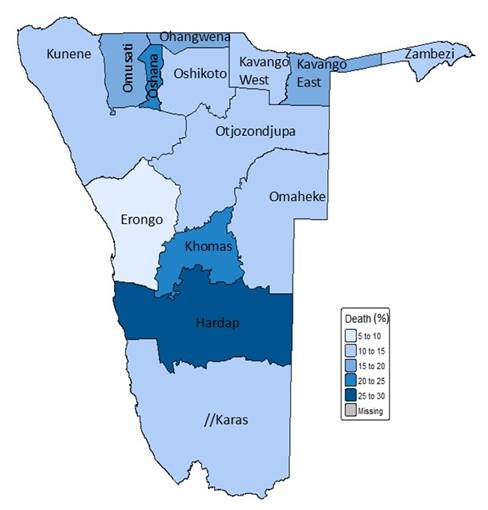
Marked regional variation in survival was also evident. Some regions, including Hardap and Khomas, exhibited comparatively higher proportions of deaths, whereas regions such as Zambezi and Erongo experienced lower mortality proportions ([Table. 1] and [Fig. 1]). With respect to HIV status, survival differed substantially between groups. Patients with unknown HIV status and those who were HIV-negative experienced higher proportions of deaths compared to HIV-positive patients. Although the HIV-negative group constituted a small proportion of the sample, it exhibited the highest mortality proportion overall. Cases with missing HIV status were retained and analyzed as a separate category, with no imputation performed. However, the high proportion of unknown HIV status (37%) may have influenced the observed mortality patterns. Regarding site of disease, most patients had pulmonary TB, and this group also accounted for most deaths [Table. 1]. However, when proportions were considered, mortality differences across disease sites were modest. Treatment history also showed some associations with survival outcomes, with previously treated patients experiencing a higher proportion of deaths compared to new cases. Furthermore, mortality increased progressively with the number of prior TB treatments, with the highest proportion observed among patients with two or more previous treatments. These findings suggest that treatment history and disease recurrence are important predictors of survival. The average duration among the DOTS-TB patients was approximately 10.2 (±5.8) months, while the median treatment duration was 9 months indicating that half of the patients have been on the DOTS program for 9 months.
|
Characteristic |
Total |
Deaths |
Log-rank
|
||
|---|---|---|---|---|---|
| Count | % | Count | % | ||
|
n |
2519 |
100 |
403 |
16.0 |
|
|
Sex |
|||||
|
Female |
1070 |
42.5 |
186 |
17.4 |
8.37, 1, 0.004* |
|
Male |
1449 |
57.5 |
217 |
15.0 |
|
|
Age group |
|||||
|
<18 years |
183 |
7.3 |
14 |
7.7 |
36.25, 3, <0.001* |
|
18-34 years |
902 |
35.8 |
108 |
12.0 |
|
|
35-54 years |
1019 |
40.5 |
172 |
16.9 |
|
|
55+ years |
415 |
16.5 |
109 |
26.3 |
|
|
Region |
|||||
|
Erongo |
214 |
8.5 |
17 |
7.9 |
25.19, 13, 0.022*
|
|
Hardap |
126 |
5.0 |
33 |
26.2 |
|
|
//Karas |
78 |
3.1 |
11 |
14.1 |
|
|
Kavango East |
271 |
10.8 |
45 |
16.6 |
|
|
Kavango West |
65 |
2.6 |
9 |
13.8 |
|
|
Khomas |
379 |
15.0 |
77 |
20.3 |
|
|
Kunene |
51 |
2.0 |
7 |
13.7 |
|
|
Ohangwena |
284 |
11.3 |
44 |
15.5 |
|
|
Omaheke |
90 |
3.6 |
13 |
14.4 |
|
|
Omusati |
183 |
7.3 |
32 |
17.5 |
|
|
Oshana |
192 |
7.6 |
39 |
20.3 |
|
|
Oshikoto |
160 |
6.3 |
22 |
13.8 |
|
|
Otjozondjupa |
366 |
14.5 |
48 |
13.1 |
|
|
Zambezi |
60 |
2.4 |
6 |
10.0 |
|
|
HIV status |
|||||
|
Negative |
38 |
1.5 |
14 |
36.8 |
22.76, 2, <0.001* |
|
Positive |
1540 |
61.1 |
188 |
12.2 |
|
|
Not specified |
941 |
37.4 |
201 |
21.4 |
|
|
Site of TB disease |
|||||
|
Pulmonary |
2405 |
95.5 |
388 |
16.1 |
6.51, 2, 0.039* |
|
Extrapulmonary |
19 |
0.8 |
1 |
5.3 |
|
|
Both |
95 |
3.8 |
14 |
14.7 |
|
|
Type of patient |
|||||
|
New case |
1646 |
65.3 |
247 |
15.0 |
15.68, 1, <0.001* |
|
Previously treated |
873 |
34.7 |
156 |
17.9 |
|
|
Number of previous TB treatments |
|||||
|
None |
1646 |
65.3 |
247 |
15.0 |
18.25, 2, <0.001* |
| One previous treatment |
718 |
28.5 |
124 |
17.3 |
|
|
Two or more previous treatments |
155 |
6.2 |
32 |
20.6 |
|
*Significant at a 5% significance level
KM survival curves
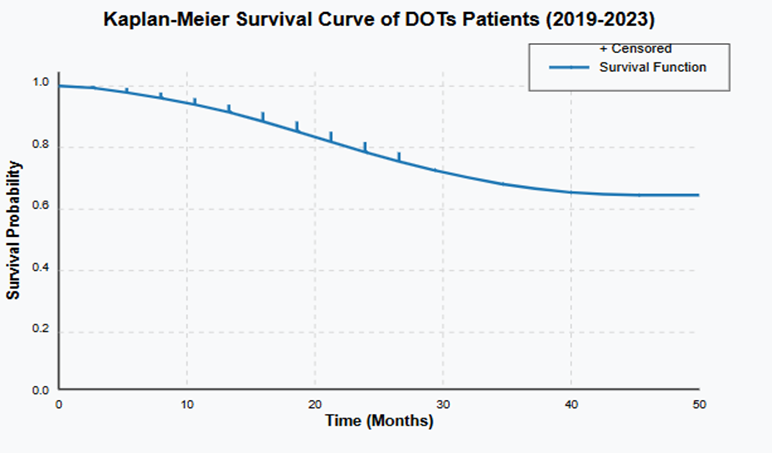
The KM graphs provide visual representations of the estimated survival probability of the entire cohort of DOTS-TB patients over the duration of the study period (2019-2023), as well as stratified by the different patient characteristics to offer a more detailed understanding of how these characteristics influence survival probabilities. Overall, all DOTS-TB patients had high survival chances at the beginning of their treatment [Fig. 2]. However, their survival rate started decreasing as the duration of their stay (in months) increased.
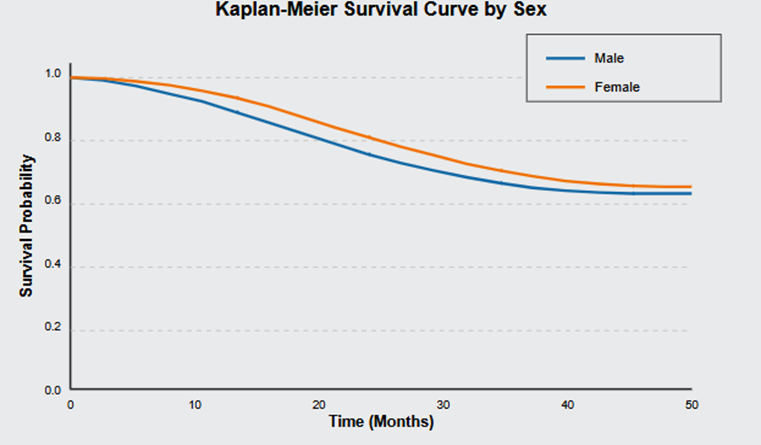
The curve showed that mortality hazard was high in month 2 as well as in month 23, after which the survival rate continued to reduce to below 0.8 (80%) till the end of the study period. [Fig. 3] shows the survival rates of DOTS-TB patients by sex. At month 0, the survival probability was 1.0 (i.e., 100% of the patients were alive), while the probability started to drop below 0.8 (80%) at month 25 for both females and males. However, it remained above 0.6 (60%) throughout the rest of the observation period. It also showed a slight survival advantage for females compared to males.
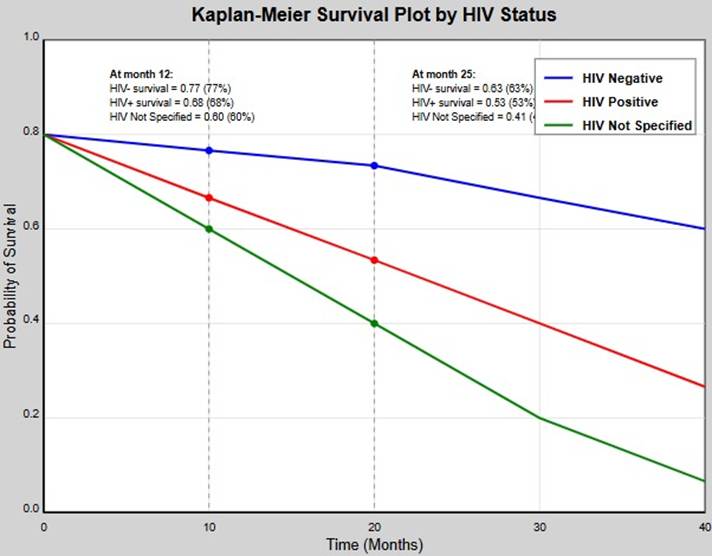
From [Fig. 4], it can be observed that HIV positive DOTS-TB patients had a lower survival rate compared to HIV negative while those whose test results were not specified had a survival rate lower than both the HIV negative and positive patients. Additionally, in month 10 the probability of survival was approximately 0.80 (80%) for HIV negative patients and 0.7 (70%) for HIV positive patients. On month 25 the probability of survival was lower than 0.7 (70%) for HIV Positive patients. From Supplementary figure S2, it can be observed that survival probabilities vary across the age groups. The <18 years age group maintained the highest survival rate throughout the study period, while the 55+ years age group showed the lowest survival probability. The 35-54 years and 18-34 years age groups showed intermediate patterns, with survival rates decreasing over time. By month 25, the survival probability for the 55+ age group had fallen below 0.80 (80%), indicating the heightened vulnerability of older patients to TB mortality. Supplementary figure S3 showed that, at month 1, the survival probability was above 0.9 (90%) for all patients across the three sites of disease categories (pulmonary, extrapulmonary, and both). The survival probability remained relatively constant for patients with both pulmonary and extrapulmonary TB. However, it started to decrease for pulmonary and extrapulmonary patients between months 13 and 15, though remaining above 0.8 (80%). Then it significantly dropped for extrapulmonary patients at month 25. For the region characteristics, it can be observed that, at month 1 the probability of survival for all the regions was above 0.8 (80%), while the probability of survival started to decrease from month 2 for all the regions (Supplementary figure S4). However, the Zambezi and Erongo Regions had the highest survival approximately 0.9 (90%) throughout the study period, while the Hardap and Omusati Regions had the least survival rates below 0.76 (76%) approximately.
From Supplementary figure S5, it can be observed that in month 1, the survival probability was approximately 0.99 (99%) for both new cases and previously treated DOTS-TB patients. However, the survival curves began to diverge noticeably from month 2 onwards. Previously treated patients showed a consistently lower survival probability throughout the study period compared to new cases. By month 20, the survival probability for new cases remained above 0.85 (85%), while for previously treated patients, it had decreased to approximately 0.78 (78%). This pattern continued with the gap widening slightly over time, with the survival probability for previously treated patients falling to approximately 0.75 (75%) by month 30, while new cases maintained a survival probability above 0.80 (80%). This suggests that DOTS-TB patients who have previously undergone TB treatment face higher mortality risks, possibly due to factors such as drug resistance, treatment complications, or underlying health conditions that contributed to their need for repeated treatment. From Supplementary figure S6, it can be observed that the survival probabilities differ markedly based on the number of previous TB treatments a DOTS-TB patient had undergone. At month 1, all three groups (no previous treatments, one previous treatment, and two or more previous treatments) showed high survival probabilities above 0.98 (98%). However, a clear stratification emerged as time progressed. Patients with no previous TB treatments (equivalent to new cases) maintained the highest survival probability throughout the study period in Supplementary figure S6. Patients with one previous treatment showed an intermediate survival pattern, with their survival probability decreasing more rapidly than those with no previous treatments. Notably, patients with two or more previous treatments demonstrated the poorest survival outcomes, with their survival probability dropping below 0.75 (75%) by month 20 and continuing to decline to approximately 0.70 (70%) by month 30. This progressive decline in survival probability with an increasing number of previous treatments suggests a dose-response relationship, where each additional TB treatment episode compounds the mortality risk. This pattern likely reflects the cumulative impact of repeated TB infections, potential development of drug resistance, and possibly deteriorating overall health status with each subsequent treatment episode.
Log-rank test analysis
The log-rank test [Table. 1] revealed a statistically significant difference in survival time between male and female DOTS-TB patients (p=0.004), suggesting that sex plays an important role in survival experience. As observed in the KM curves [Fig. 3], males had a lower survival probability than females despite their lower representation in total deaths. This finding suggests that while males constituted a higher percentage of DOTS-TB cases, males who contracted TB faced a higher risk of mortality, which aligns with observations from similar studies done in the sub-Saharan Africa region. Similarly, the highly significant result for age groups (p<0.001) confirms what was visually evident in the KM survival curves (Supplementary figure S2). To be precise, there were substantial differences in survival across age categories, with the oldest group (55+ years) showing markedly decreased survival probabilities compared to younger groups. The <18 years group maintained the highest survival rates throughout the study period, while survival probabilities decreased progressively with advancing age. These findings highlight age as a critical factor in DOTS-TB mortality risk assessment. Furthermore, the log-rank test strongly confirms that HIV status (p<0.001) significantly affects survival outcomes in DOTS-TB patients [Table. 1]. As illustrated in [Fig. 4], HIV-positive patients had lower survival rates compared to HIV-negative individuals, while those with unknown HIV status demonstrated the poorest outcomes. This finding emphasizes the critical impact of HIV co-infection on DOTS-TB mortality and underscores the importance of HIV testing, antiretroviral therapy, and integrated TB-HIV care. The site of TB disease showed a statistically significant association with survival time (p=0.039), though with a less pronounced effect compared to other variables. Patients with pulmonary TB, extrapulmonary TB, and both forms exhibited different survival trajectories as depicted in Supplementary figure S3. The extrapulmonary TB group showed a sharp drop in survival at month 25, suggesting that while less common, this form of TB may present unique challenges to long-term survival.
Moreover, the log-rank test demonstrated a highly significant difference in survival between new TB cases and previously treated cases (p<0.001). As shown in the survival curve (Supplementary figure S5), previously treated DOTS-TB patients had substantially lower survival probabilities throughout the study period compared to new cases, indicating that retreatment cases face higher mortality risks. Also, the survival curve showed that while both groups started with high survival rates, the previously treated patients experienced a more rapid decline in survival probability, particularly noticeable after month 10, with the gap between the two groups widening over time. This visual representation and the result from the log-rank test highlight the clinical importance of treatment history as a prognostic factor for TB mortality. This could be attributed to potential drug resistance, treatment fatigue, or underlying comorbidities that complicate TB management in patients requiring retreatment. In addition, the number of previous TB treatments also showed a highly significant association with survival time (p<0.001). As shown in the survival curve (Supplementary figure S6), DOTS-TB patients with two or more previous treatments demonstrated the poorest survival outcomes, followed by those with one previous treatment, while those with no previous TB episodes had the best survival rates. This further illustrates the progressive decline in survival probability with increasing treatment history. The survival curve for patients with no previous treatment remained consistently higher throughout the observation period, while those with one or more previous treatments experienced sharper declines in survival, particularly among patients with two or more previous episodes whose survival probability dropped below 70% before the end of the observation period. This trend highlights the compounding risk associated with repeated TB treatment. This progressive decline in survival with increasing treatment history emphasizes the cumulative risk associated with repeated TB episodes. The regional analysis revealed statistically significant differences in survival across Namibia's 14 regions (p=0.022). As shown in Supplementary figure S4, there was considerable geographic variation in survival probabilities. Zambezi and Erongo Regions maintained higher survival rates (approximately 90%) throughout the study period, while Hardap and Omusati recorded the lowest rates (below 76%). These highlight potential geographic disparities in access to care, disease severity, or treatment outcomes, due to differences in healthcare infrastructure, socioeconomic factors, or regional TB program implementation effectiveness.
CPH regression model
The multivariable Cox proportional hazards model [Table. 2] identified several demographic and clinical characteristics that independently predicted mortality among DOTS-TB patients in Namibia after adjusting for potential confounders. Sex remained an important predictor of survival, with males (aHR 1.42, CI: 1.04-1.93) experiencing a 1.4 times higher risk of mortality than females, even after controlling for age, HIV status, treatment history, disease site, and region. Age also emerged as one of the significant predictors of mortality, demonstrating a clear and progressive increase in risk with advancing age. Compared to younger patients, older age groups experienced substantially poorer survival, with between 1.8- and 2.5-times higher risk of mortality observed among patients aged 35-54 (aHR 1.78, CI: 1.19-2.66) and 55 years and above (aHR 2.45, CI: 1.68-3.57). The monotonic increase in mortality risk across age categories suggests a strong dose-response relationship, highlighting age-related vulnerability as a critical determinant of DOTS-TB outcomes. HIV status was significantly associated with mortality, with HIV-positive patients exhibiting significantly poorer survival (aHR 1.63, CI: 1.27-2.09) of 1.6 times higher risk of mortality than HIV-negative patients. In addition, patients with undocumented HIV status (aHR 1.39, CI: 1.02-1.89) also faced elevated mortality risk, with a 1.4 times higher risk. This underscoring the potential consequences of missed HIV testing or delayed HIV care within TB programs. These findings reinforce the importance of integrated TB-HIV management in improving survival outcomes.
Regarding the number of previous TB treatments, patients with only one previous treatment (aHR 1.52, CI: 1.01-2.30) and two or more treatments (aHR 1.89, CI: 1.26-2.83) had between 1.5- and 1.9-times higher risks of mortality compared to patients who did not have a TB treatment before [Table. 2]. Likewise, patients with combined pulmonary and extrapulmonary diseases had a 1.5 times higher mortality risk (aHR 1.51, CI: 1.04-2.19) compared to patients with pulmonary TB alone, suggesting that disease dissemination is an important marker of severity and prognosis. Treatment history also played a significant role in survival. Previously treated patients (aHR 1.46, CI: 1.01-2.11) experienced a 1.5 times higher mortality risk than newly treated patients. This dose-response pattern indicates the cumulative adverse impact of recurrent TB, potentially reflecting drug resistance, treatment interruptions, or long-term pulmonary damage. Finally, regional disparities in mortality persisted even after adjustment for individual-level demographic and clinical factors. Certain regions exhibited higher mortality risk such as the Hardap Region (aHR 1.46, CI: 1.02-2.08) compared to the Khomas Region, while Erongo Region (aHR 0.71, CI: 0.51-0.99) had a lower risk. These differences suggest that contextual factors such as healthcare access, program performance, or socioeconomic conditions may influence TB outcomes regionally beyond patient-level characteristics. The overall model fit was assessed, yielding a statistically significant result ( =107.36, df=25). This indicates that the inclusion of all seven covariates significantly improved the model's explanatory power compared to the null model. From the Schoenfeld residuals test results, while most variables satisfied the assumption, somewhat evidence of non-proportionality was observed for age group and HIV status (Supplementary figure S7). This suggests that the effect of these variables on mortality risk may vary over the observation period. However, the model was retained as the primary analytical framework while acknowledging this limitation.
The main aim of this study was to identify the sociodemographic and clinical risk factors influencing survival among DOTS-TB patients between 2019 and 2023. The findings showed sex, age, HIV status, treatment history, and regional differences in survival outcomes, all of which had important implications for TB control strategies in Namibia. Overall, the KM survival analysis revealed a high initial survival probability among patients at the beginning of treatment, with a sharp decline starting from month 2, culminating in a significant drop below 80% by month 23. These findings
| Characteristics | Hazard Ratio (adjusted) |
Standard error |
P-value | 95% confidence interval |
|---|---|---|---|---|
| Sex | ||||
| Male | 1.42 | 0.16 | 0.028* | 1.04-1.93 |
| Female (ref) | 1 | |||
| Age group | ||||
| 18-34 | 1.35 | 0.19 | 0.076 | 0.97-1.88 |
| 35-54 | 1.78 | 0.22 | 0.005* | 1.19-2.66 |
| 55+ | 2.45 | 0.26 | <0.001* | 1.68-3.57 |
| <18 (ref) | 1 | |||
| HIV status | ||||
| Positive | 1.63 | 0.18 | <0.001* | 1.27-2.09 |
| Not specified | 1.39 | 0.17 | 0.036* | 1.02-1.89 |
| Negative (ref) | 1 | |||
| Site of TB disease | ||||
| Extrapulmonary | 1.32 | 0.22 | 0.182 | 0.88-1.97 |
| Both | 1.51 | 0.24 | 0.032* | 1.04-2.19 |
| Pulmonary (ref) | 1 | |||
| Type of patient | ||||
| Previously treated | 1.46 | 0.19 | 0.042* | 1.01-2.11 |
| New (ref) | 1 | |||
| Number of previous TB treatments | ||||
| One previous treatment | 1.52 | 0.21 | 0.047* | 1.01-2.30 |
| Two or more previous treatments | 1.89 | 0.24 | 0.002* | 1.26-2.83 |
| None (ref) | 1 | |||
| Region | ||||
| Erongo | 0.71 | 0.18 | 0.047* | 0.51-0.99 |
| Hardap | 1.46 | 0.22 | 0.037* | 1.02-2.08 |
| //Karas | 0.93 | 0.20 | 0.721 | 0.62-1.39 |
| Kavango East | 0.88 | 0.21 | 0.540 | 0.58-1.33 |
| Kavango West | 0.81 | 0.23 | 0.353 | 0.52-1.27 |
| Kunene | 1.11 | 0.24 | 0.666 | 0.70-1.76 |
| Ohangwena | 0.92 | 0.19 | 0.659 | 0.63-1.34 |
| Omaheke | 1.28 | 0.25 | 0.323 | 0.78-2.09 |
| Omusati | 1.39 | 0.18 | 0.059 | 0.99-1.96 |
| Oshana | 0.85 | 0.20 | 0.417 | 0.57-1.26 |
| Oshikoto | 0.89 | 0.20 | 0.562 | 0.60-1.32 |
| Otjozondjupa | 1.14 | 0.22 | 0.547 | 0.74-1.75 |
| Zambezi | 0.66 | 0.28 | 0.119 | 0.39-1.12 |
| Khomas (ref) | 1 | |||
*Significant at a 5% significance level; (ref)=reference category
are consistent with those of [34], who also observed a decline in survival during the early months of treatment among TB patients in Zambia. The early mortality observed in the current study could be attributed to several factors such as delayed treatment initiation, severe disease presentation at diagnosis, or adverse drug reactions during the intensive phase, as suggested by [8]. Additionally, the observed decline in survival after month 23 may reflect long-term treatment adherence challenges or the emergence of drug resistance, which can be associated with higher mortality rates in patients. The findings highlight the importance of enhancing patient monitoring and support, particularly during the initial treatment phase and throughout extended treatment periods.
The stratified survival analysis by sex revealed that males had a lower survival probability compared to females, although the survival gap narrowed as the observation period progressed. The higher number of deaths among males is consistent with other similar studies across sub-Saharan Africa[25, 34-35], where it was suggested that males tend to exhibit poorer TB outcomes compared to females and women in Southern Africa often demonstrate better healthcare-seeking behaviours and higher treatment adherence, which may contribute to their initial survival advantage. Lönnroth et al.[35] further highlighted socioeconomic factors such as limited education, poor living conditions, and food insecurity that may disproportionately affect men, leading to poorer TB survival outcomes. These findings underscore the need for sex-specific interventions that consider both biological and socio-cultural factors influencing TB outcomes. The age-stratified survival analysis revealed a considerable decline in survival probability among patients aged 55+ years, with survival dropping below 75% by month 25. This is consistent with the age-specific literature on TB, which has consistently shown that older patients face higher mortality risks due to immunosenescence, comorbidity burden, and age-related physiological changes that complicate TB management. The CPH regression analysis confirmed that patients aged 55 years and older had over twice the risk of death compared to those under 18. This aligns with findings from [28], who also observed that TB patients aged 55 and older had a higher mortality risk, particularly in MDR-TB cases. The increased mortality risk among older patients emphasizes the need for more intensive care and monitoring for this age group, as well as considering coexisting health conditions that may complicate TB treatment.
The most striking finding in this study was the significant difference in survival outcomes based on HIV status. HIV-positive patients demonstrated markedly lower survival probabilities compared to HIV-negative individuals, with those whose HIV status was not specified showing the poorest survival outcomes. By month 10, HIV-positive patients had an approximately 80% survival probability, which further declined to below 80% by month 25. These results align with studies conducted in other sub-Saharan African countries such as [28, 36], who documented that TB-HIV co-infection increases the mortality risk by 2-3 times. HIV compromises the immune system, leading to a higher susceptibility to opportunistic infections and poor treatment outcomes. The significant survival disadvantage observed among patients with unspecified HIV status is concerning, as it suggests potential gaps in HIV testing or missed diagnoses. This aligns with findings by [6], who reported that patients with undocumented HIV results had significantly worse treatment outcomes, regardless of their actual HIV status. These findings highlight the importance of integrated TB-HIV care, early HIV testing, and antiretroviral therapy (ART) to improve survival among TB patients, as emphasized by [2]. The survival analysis by disease site revealed a notable decline in survival for patients with isolated extrapulmonary TB after month 23, although patients with both pulmonary and extrapulmonary TB maintained high survival probabilities throughout the study period. This finding is counterintuitive, as multisite TB generally indicates more severe disease and often leads to poorer outcomes. However, it may be explained by the more intensive clinical monitoring and aggressive treatment strategies employed for patients with disseminated disease, or by a selection bias in which only the stronger patients survive long enough to develop multisite TB. The significant drop in survival among extrapulmonary TB patients at month 25 may be due to delayed treatment initiation or challenges in diagnosing and managing this form of TB, as noted by [37]. Extrapulmonary TB often involves organs that are harder to treat, and patients with these forms of TB may face long-term complications that contribute to poor survival.
Furthermore, significant regional variation in survival outcomes was observed, with Zambezi and Erongo Regions maintaining high survival rates (approximately 90%), while Hardap and Omusati Regions exhibited much lower survival rates (below 76%). These findings highlight the geographic disparities in healthcare access, socioeconomic conditions, and TB control efforts within Namibia. The poor outcomes for Hardap and Omusati Regions are probable especially when TB mortality in these Regions is most often driven by: (i) late/delayed diagnoses in that by the time patients seeks treatment, their illness is already far advanced leading to a less effective treatment and higher mortality outcome[28], (ii) high HIV-TB coinfection and comorbidity since HIV is known to generally weakens the immune systems which in turn accelerates the TB progression in an infected body[18, 33], (iii) high burden of drug-resistant TB strains such as MDR-TB which requires a prolonged complex treatment regimen that can be difficult for patients to maintain and challenging to manage in highly impoverished or mobile populations[28]; and socioeconomic challenges such as malnutrition, poor living conditions, food insecurity, overcrowding, poverty and the distances required to travel to the nearest health centres, all of which can disrupt patients' treatment adherence leading to interruption in treatment which lowers immune defences and further drives disease transmission and increases the likelihood of mortality. Additionally, recent TB mortality related studies done across all regions in Namibia such as [18] and [28] have identified the Hardap and Omusati Regions as having a significantly higher risk of mortality. The better survival outcomes in the Erongo Region could be attributed to its better-resourced healthcare facilities and stronger economic standing as highlighted in[38], while the poorer outcomes in the Hardap and Omusati Regions suggest systemic challenges, such as healthcare workforce shortages, limited diagnostic capacity, and geographic barriers to care. The findings reinforce the need for region-specific interventions that target areas with poor survival outcomes, including strengthening healthcare infrastructure, improving access to treatment, and addressing local socio-economic factors that hinder TB management. Additionally, the analysis of geographic hotspots revealed that the Khomas, Ohangwena, and Kavango East Regions had the highest concentrations of DOTS-TB cases, reflecting the challenges posed by urbanization, migration, and cross-border movement. The high burden in the Khomas Region is likely due to Windhoek's urban density, while the prevalence in the Ohangwena and Kavango East Regions may be linked to border-related TB transmission dynamics. The lower-case numbers in regions like Kunene and Omaheke Regions may reflect under-detection, given the sparse population distribution and limited healthcare facilities in these areas. This highlights the need for targeted case-finding strategies, including mobile screening and community health worker engagement, particularly in remote and border regions.
Moreover, DOTS-TB patients who were males, aged 35-54 and 55 years and above, and were HIV-positive had higher risk of mortality, with patients aged 55+ years having more than twice the risk of death compared to younger patients. Similarly, those who have had at least one previous TB treatments, and been diagnosed with a combined pulmonary and extrapulmonary type of TB diseases had higher risk. Patients in the Hardap Region had a higher risk which is expected since this region is known for its mining activities, primarily involving the exploration for rare, base and precious metals, industrial materials like clay, and recently uranium exploration (amid public environmental concerns such as water pollution). The increased mortality risk among previously treated patients highlights the compounded effects of recurrent TB episodes, which often involve drug resistance, treatment default or treatment failure. Treatment default has been previously described as being closely associated with higher mortality rates, with DOTS-TB studies such as [39] suggesting that concentrated efforts to further reduce defaulting of treatment may disproportionately decrease deaths. The higher risk of mortality among males can be due to pressure to participate in unsafe social activities such as excessive smoking, alcohol consumption, and drug abuse. This finding is consistent with the results reported by [9, 40-41]. HIV-positive patients had significantly higher mortality risks. This is not surprising as HIV-TB coinfection can accelerate immune resistance reduction of an infected person and increase the risk of death. A weakened immune system by HIV makes the patients more easily prone to contacting other health illnesses or diseases with fatal outcomes for such patients if these illnesses are life-threatening and incurable. This finding concurs with findings reported by [9, 21, 42, 43] who have all shown that the mortality risk for HIV-TB patients is high, with [9] further concluding that the coinfection of TB with HIV promotes the progression and deterioration of TB and leads to rapid death. Also, the current study’s findings may likely reflect the disruptions caused by the COVID-19 pandemic, given the study period, as highlighted in [14, 34]. Furthermore, regional disparities in mortality risk, particularly in the Hardap Region, point to the importance of region-specific interventions that address local healthcare challenges. The identification of these risk factors supports the development of risk stratification approaches in TB management, where resources and interventions can be targeted toward patients exhibiting multiple high-risk characteristics.
Although TB epidemiology can shift meaningfully with changes in treatment policy, diagnostics, and/or national program priorities, challenges such as undiagnosed cases, drug-resistant TB, and social factors like poverty and overcrowding persist. During the World TB commemoration day in March 2026, Namibia’s Minister of Health and Social Services remarked that the ministry managed to trace 8,370 TB patients last year, 293 of whom had drug-resistant TB strains. The minister further highlighted that although the country has a successful treatment rate of 75%, an estimated 34% of TB cases still go undiagnosed, prompting the ministry to consider a national embarkment of finding all TB cases early and providing quality treatment for the patients. The findings of this study can further provide crucial insights for TB control programs in Namibia, highlighting specific high-risk groups that may benefit from enhanced monitoring, support, and early intervention strategies.
This study demonstrates that several factors significantly affect survival among DOTS-TB patients in Namibia, including age, sex, HIV status, treatment history, and regional location. The findings underscore the importance of sex-sensitive and age-appropriate interventions, particularly for older and male patients. The high mortality risk observed among HIV-positive and previously treated patients on DOTS highlights the need for integrated TB-HIV care and specialized management for recurrent TB cases. Additionally, regional variations in mortality risk call for tailored interventions that consider local healthcare infrastructure and socio-economic factors. These insights can inform targeted TB control. All governmental and non-governmental groups must take action to address the complicated problem of DOTS-TB mortality, which lacks a straightforward answer. At all costs, it can be avoided by putting good control measures in hospitals allowing for the development of targeted strategies to reduce DOTS-TB/TB mortality such as better monitoring for drug toxicity, and integration with the management of age-related comorbidities. For patients with HIV-positive and unspecified HIV status, the findings reinforce the importance of (i) integrated TB-HIV services, (ii) early antiretroviral therapy initiation, and (iii) enhanced monitoring for immune reconstitution inflammatory syndrome (IRIS). Also, (i) strengthening provider-initiated HIV testing and counselling within DOTS-TB services, (ii) reducing HIV-related stigma, and (iii) ensuring adequate testing supplies across all facilities are critical steps to minimize the proportion of DOTS-TB patients with unknown HIV status. Patients who have already received TB therapy, particularly those who have had several episodes, require specialist therapeutic measures. These may include drug susceptibility testing before the commencement of treatment(s) and more intensive directly monitored treatment therapy. The significant regional variations in both TB prevalence and mortality risk provide evidence for differential resource allocation across Namibia's 14 regions. Simultaneously, the potential under-detection in some regions with apparently lower caseloads warrants targeted strengthening of diagnostic capacity in these areas. Building resilience against future disruptions might include cross-training healthcare workers and maintaining essential TB services during emergencies.
This study analysis of survival patterns and mortality determinants among DOTS-TB patients in Namibia provides critical evidence for programmatic and policy decisions. The identification of specific high-risk groups of older adults, HIV-positive individuals, retreatment cases, and patients in certain regions enables targeted interventions to reduce DOTS-TB mortality. The study findings support a multi-level approach to DOTS-TB control that addresses individual clinical factors, healthcare system capabilities, and broader social determinants. The regional patterns observed underscore the importance of context-specific TB control strategies and health system resilience. The study's methodological approach, combining descriptive, survival, and regression modelling analyses, offers a template for comprehensive TB program evaluation in similar settings. Despite certain limitations, this research contributes substantially to the understanding of DOTS-TB epidemiology and outcomes in Namibia, filling important knowledge gaps and generating actionable insights for public health practice. Future research should address the methodological limitations identified in this study. Advanced survival analysis approaches, such as joint modelling of longitudinal and time-to-event data, could better capture the dynamic relationship between time-varying covariates. Thus, a further epidemiological study building on these findings is recommended as it could have the potential to further refine TB control strategies and ultimately reduce the burden of DOTS-TB mortality as well as TB mortality in Namibia and similar high-burden settings.
Limitations
Several limitations that may have influenced the validity and generalizability of the study findings were encountered. A primary limitation was the quality and completeness of medical records, as the study relied on incomplete medical documentation which may have affected the reliability of the data that was used for analysis. This was fundamentally rooted in data quality issues, as patients' records were manually recorded at the hospitals and were sometimes not adequately captured by healthcare personnel. This manual documentation system was prone to human error, inconsistent recording practices, and variations in data collection protocols across different healthcare facilities. Additionally, due to the study's reliance on secondary data obtained from existing medical records, the occurrence of missing data was highly probable and unavoidable. This data incompleteness may have been attributed to several factors, including patients not returning to the hospitals where their information was initially captured due to various socioeconomic and logistical barriers such as migration to other regions, lack of adequate transportation infrastructure, financial constraints that prevented follow-up visits, and potential stigma associated with TB diagnosis that discouraged continued engagement with healthcare services. Furthermore, the retrospective nature of the study design meant that the researcher had no control over the original data collection processes, which may have resulted in inconsistent variable definitions, missing key clinical parameters, and incomplete follow-up information that could have provided more comprehensive insights into patient outcomes. The study was also limited by the inability to capture patient-specific factors such as treatment adherence patterns, socioeconomic status indicators, nutritional status, and comorbidity details that were not systematically documented in the medical records but could have significantly influenced mortality outcomes among DOTS-TB patients. Also, potential unmeasured confounders such as nutritional status, diabetes comorbidity, alcohol use, and household crowding were not documented, and these are well-documented risk factors for TB mortality. Finally, this study was focused on only TB patients who were enrolled on the DOTS program in Namibia. This decision excluded patients who received other forms of treatment or those who were not enrolled in the DOTS program, which limited the generalizability of the findings to the broader TB population in Namibia.
Acknowledgment: The Namibia’s MoHSS is thanked for availing the 2019 to 2023 TB data for the purpose of this study.
Conflict of interest: None.
Funding: This research study did not receive any specific grant from funding agencies in the public, commercial, or non-profit organization sectors.
1. Global tuberculosis report 2023. 2023; Available from: https://www.who.int/teams/global-programme-on-tuberculosis-and-lung-health/tb-reports/global-tuberculosis-report-2023
2. Global tuberculosis report 2022. 2022; Available from: https://www.who.int/teams/global-programme-on-tuberculosis-and-lung-health/tb-reports/global-tuberculosis-report-2022
3. Global tuberculosis report 2021. 2021; Available from: https://www.iom.int/sites/g/files/tmzbdl486/files/documents/2023-03/Global-TB-Report-2021.pdf
4. Ministry of Health and Social Services. National TB and Leprosy Programme Annual Report Annual tuberculosis report 2021-2022. Windhoek, Namibia. 2023.
5. A retrospective study on the outcomes of tuberculosis treatment in Felege Hiwot Referral Hospital, Northwest Ethiopia. International Journal of Medicine and Medical Sciences. 2013; 5 (2). Available from: https://doi.org/10.5897/IJMMS12.142
6. Evaluation of Tuberculosis Treatment Outcome of TB/HIV Co-Infection: A Four-Year Retrospective Cohort Study in HIV-Prevalent Setting of North Central Nigeria. Journal of Tuberculosis Research. 2016; 04 (03). Available from: https://doi.org/10.4236/jtr.2016.43015
7. Predictors of tuberculosis treatment success under the DOTS program in Namibia. Expert Review of Respiratory Medicine. 2018; 12 (11). Available from: https://doi.org/10.1080/17476348.2018.1520637
8. Prevalence of tuberculosis in post-mortem studies of HIV-infected adults and children in resource-limited settings. AIDS. 2015; 29 (15). Available from: https://doi.org/10.1097/qad.0000000000000802
9. Survival Analysis of Risk Factors for Mortality in a Cohort of Patients with Tuberculosis. Canadian Respiratory Journal. 2020; 2020 Available from: https://doi.org/10.1155/2020/1654653
10. What is the true tuberculosis mortality burden? Differences in estimates by the World Health Organization and the Global Burden of Disease study. International Journal of Epidemiology. 2018; 47 (5). Available from: https://doi.org/10.1093/ije/dyy144
11. Treatment correlates successful outcomes in pulmonary multidrug-resistant tuberculosis: An individual patient data meta-analysis. Lancet. 2018; 392 (10150). Available from: https://doi.org/10.1016/s0140-6736(18)31644-1
12. Determinanet of the survival pattern of tuberculosis patients treated under directly observed treatment short course at Pawe Hospital, Ethiopia. Cogent Medicine. 2021; 8 (1). Available from: https://doi.org/10.1080/2331205x.2021.1944477
13. A systematic review of the quality of conduct and reporting of survival analyses of tuberculosis outcomes in Africa. BMC Medical Research Methodology. 2021; 21 (1). Available from: https://doi.org/10.1186/s12874-021-01280-3
14. The impact of COVID-19 and the restoration of tuberculosis services in the Western Pacific Region. European Respiratory Journal. 2020; 56 (4). Available from: https://doi.org/10.1183/13993003.03054-2020
15. Mondjila A. Factors associated with unsuccessful tuberculosis treatment outcomes of the DOTS programme in Kunene and Oshana regions, Namibia. Masters thesis. University of Namibia. 2022.
16. Mohamed N, Rauf A, Kalenga R. Integrated TB care models in resource-poor settings. Global Health Journal. 2022;6(4), 211-218.
17. Assessment of Knowledge, Attitude, and Practice towards Tuberculosis among Taif University Students. Healthcare. 2023; 11 (20). Available from: https://doi.org/10.3390/healthcare11202807
18. Factors associated with the unsuccessful TB treatment outcomes in the northern regions of Namibia: a mixed methods study. BMC Infectious Diseases. 2023; 23 (1). Available from: https://doi.org/10.1186/s12879-023-08268-y
19. Factors associated with mortality in tuberculosis patients. Journal of Research in Medical Sciences: The Official Journal of Isfahan University of Medical Sciences. 2013; 18 (1). Available from: https://pmc.ncbi.nlm.nih.gov/articles/PMC3719227/
20. Survival time among patients who were diagnosed with tuberculosis, the precocious deaths and associated factors in southern Brazil. Tropical Medicine and Health. 2021; 49 (1). Available from: https://doi.org/10.1186/s41182-021-00320-4
21. High mortality among tuberculosis patients on treatment in Nigeria: a retrospective cohort study. BMC Infectious Diseases. 2017; 17 (1). Available from: https://doi.org/10.1186/s12879-017-2249-4
22. Factors Associated with Death during Tuberculosis Treatment of Patients Co-Infected with HIV at the Yaoundé Central Hospital, Cameroon: An 8-Year Hospital-Based Retrospective Cohort Study (2006–2013). PLoS ONE. 2014; 9 (12). Available from: https://doi.org/10.1371/journal.pone.0115211
23. Determinant factors for mortality during treatment among tuberculosis patients: Cox proportional hazards model. Indian Journal of Tuberculosis. 2019; 66 (1). Available from: https://doi.org/10.1016/j.ijtb.2017.05.001
24. Survival and predictors of mortality after completion of TB treatment among people living with HIV: a 5-year analytical cohort. BMC Infectious Diseases. 2023; 23 (1). Available from: https://doi.org/10.1186/s12879-023-08217-9
25. Prevalence and factors associated with tuberculosis among the mining communities in Mererani, Tanzania. PLOS ONE. 2023; 18 (3). Available from: https://doi.org/10.1371/journal.pone.0280396
26. A systematic review of risk factors for mortality among tuberculosis patients in South Africa. Systematic Reviews. 2023; 12 (1). Available from: https://doi.org/10.1186/s13643-023-02175-8
27. Predictors of mortality and survival probability distribution among patients on tuberculosis treatment in Vihiga County, Kenya. African Health Sciences. 2023; 23 (1). Available from: https://doi.org/10.4314/ahs.v23i1.24
28. Frailty modelling for multidrug-resistant tuberculosis mortality in Namibia. Journal of Public Health Research. 2025; 14 (2). Available from: https://doi.org/10.1177/22799036251336969
29. Ending tuberculosis (TB): A priority for Namibia. WHO Regional Office for Africa. 2024. Available from: https://www.afro.who.int/countries/namibia/news/ending-tuberculosis-tb-priority-namibia
30. Drug-resistant tuberculosis treatment success predictors in Namibia. JAC-Antimicrobial Resistance. 2024; 6 (6). Available from: https://doi.org/10.1093/jacamr/dlae211
31. Survival analysis: What it is, how it works, pros and cons. Investopedia. 2021; Available from: https://www.investopedia.com/terms/s/survival-analysis.asp
32. Tuberculosis Treatment Outcomes and Associated Factors among TB Patients Attending Public Hospitals in Harar Town, Eastern Ethiopia: A Five-Year Retrospective Study. Tuberculosis Research and Treatment. 2019; 2019 Available from: https://doi.org/10.1155/2019/1503219
33. A multinomial modelling of the factors that impact viral load levels in adults on anti-retroviral therapy in Namibia. International Science and Technology Journal of Namibia. 2021; 14 Available from: https://doi.org/10.32642/istjn.v14i.1569
34. Diagnosed with TB in the era of COVID-19: patient perspectives in Zambia. Public Health Action. 2020; 10 (4). Available from: https://doi.org/10.5588/pha.20.0053
35. Drivers of tuberculosis epidemics: The role of risk factors and social determinants. Social Science & Medicine. 2009; 68 (12). Available from: https://doi.org/10.1016/j.socscimed.2009.03.041
36. A Comprehensive Review of HIV-Associated Tuberculosis: Clinical Challenges and Advances in Management. Cureus. 2024; 16 (9). Available from: https://doi.org/10.7759/cureus.68784
37. Diagnostic Challenges in Extrapulmonary Tuberculosis: A Single-Center Experience in a High-Resource Setting at a German Tertiary Care Center. Infectious Disease Reports. 2025; 17 (3). Available from: https://doi.org/10.3390/idr17030039
38. Ministry of Health and Social Services. National TB and Leprosy Programme Annual Report Annual tuberculosis report 2020-2021. Windhoek, Namibia. 2022
39. Tuberculosis-Related Deaths within a Well-Functioning DOTS Control Program. Emerging Infectious Diseases. 2002; 8 (11). Available from: https://doi.org/10.3201/eid0811.020021
40. A Retrospective Case-Control Study, Factors Affecting Treatment Outcomes for Pulmonary Tuberculosis in İstanbul, Turkey. Balkan Medical Journal. 2013; 30 (2). Available from: https://doi.org/10.5152/balkanmedj.2013.005
41. Tuberculosis treatment outcome and associated factors among smear-positive pulmonary tuberculosis patients in Afar, Eastern Ethiopia: a retrospective study. The Brazilian Journal of Infectious Diseases. 2016; 20 (6). Available from: https://doi.org/10.1016/j.bjid.2016.07.012
42. Application of Cox Proportional Hazards Model in Case of Tuberculosis Patients in Selected Addis Ababa Health Centres, Ethiopia. Tuberculosis Research and Treatment. 2014; 2014 Available from: https://doi.org/10.1155/2014/536976
43. Pathogenesis of HIV-1 and Mycobacterium tuberculosis co-infection. Nature Reviews Microbiology. 2018; 16 (2). Available from: https://doi.org/10.1038/nrmicro.2017.128
Subscribe now for latest articles and news.